Am I the first to see the similarity? I'd be interested to find out.
As you are aware, I ride a bike for transport, have done all my life and the time I spent living anywhere but in the Netherlands have on many journeys had my life threatened as a cyclist, both intentionally and simply by being in the way.
In the Netherlands cycling is funded and defended as a form of transportation and segregation is the main tool used to keep cyclists safe from faster, heavier vehicles such as cars and lorries. It is also supported legally - for the most part, the driver of the faster, heavier vehicle is considered to bare the majority of the responsibility for their behaviour on the road.
Gay rights in the Netherlands are just as vulnerable as in the UK. The Netherlands is known for being a tolerant country, but only recently, male politicians made a stand by publicly holding hands to support the right for two homosexuals to openly hold hands in public places without having the life kicked out of them. We still need Gay Pride marches.
I am also a woman, a heterosexual woman, married with two children. I am a couple of inches taller than my husband, I open the jars in our house, and we share the DIY tasks according to who is better - he has a degree in electrical engineering so electrics, he's also much better at shelves, setting up PC's and IT related things. I maintain our bikes, the garden - including building stuff like planters, a bbq etc. I am the bbq lighter and maintainer. We share the cooking, I specialise more in oven related dishes and use more tools and stuff like the pressure cooker, whereas he tends to prefer the Wok and makes much better rice than I can.
I have a reasonable collection of shoes, including several pairs of Doctor Martens, birkenstocks, ballet pumps, court shoes, dancing shoes, walking shoes etc. He usually has two or three pairs of shoes on the go.
I have a huge collection of records and music, I am the music geek, but my husband has arguably more music, all on his harddrive and a very large collection of board games.
We share the cleaning, and he does most of the laundry. I do more childcare because our children are gifted autistic which makes them quite a handful. Having said that, he does lots of gaming with them, which they love, both made up D&D style, board games, Live Role Playing and online/computer based with them, so it's far from one sided.
Some of our attributies are considered "gender typical" others not so. I am keen that my children, both boys, grow up with the idea that anything they want to do, providing they are not hurting anyone, is fair game. I have not pushed them towards or away from anything based on their sex. If you don't need genitals to do it, it's fair game.
What I have noticed in the past decade or so, is that in my country of birth, the UK, the marginalisation of sexual preferences other than heterosexual has decreased, which in turn has meant that, quite rightly, the idea that who you choose to have sex with or spend your life with, have children and leave all your possessions to, is largely your business. Providing you don't hurt anyone, they are old enough to consent and they have indeed, consented without fear for themselves or someone they care about, you are within the law.
These laws and norms have all been heading towards making sure that you can prevent people from being taken advantage of, excluded, persecuted or harmed because of their choices and preferences within the framework of protecting everyone from discrimination, overt or covert.
At the same time, transportation has been evolving too. The bike, once a symbol of feminism and equality - in the early 20th Century it sped up the changes in women's clothing norms - allowing women to wear trousers and move around freely.
The car, once a man's toy, also became adopted as a means of freedom for many - being able to drive is a liberation of mobility. You can travel anywhere, anytime of the day or night in safety.
Public transportation has always had mixed reviews as far as safe mobility for women is concerned and the loss of guards on trains and conductors on busses was not a great move in the context of feeling safe travelling alone. This coincided with the increase of cars on the road, the one getting easier and safer, the other becoming prohibitively dangerous alone.
All the way through this obviously, the better off you are financially, the less impact the bad sides have and the benefits increased too. Although being able to afford a taxi doesn't mean your taxi driver doesn't turn out to be a serial rapist, but that's another can of worms.
Cycling among all this, since the increase in motorised transportation, with its associated advantages and disadvantages has changed dramatically. With fast busy roads and little provision for cyclists, the act of riding a bike for a woman or a child has been actively discouraged, you could say. At best cyclist have been driven to the pavements where they are also universality hated.
A tiny percentage of women in the UK ride bikes. Why? it's over half the cycling population in the Netherlands.
We know why, because it's both perceptually dangerous, and actually dangerous. It requires a "masculine" amount of bloody minded determination and stamina.
Among cycling activists, I am in a minority, as a transport cyclist and woman. I am there to support the idea that cycling should be available as a means of transportation on public roads and that the infrastructure that is paid for by taxation should provide equally for all road users. Not, as it now stands, heavily subsidising and preferring motorised private transportation. I am not alone, but it's a less well supported cause than even say, gay rights. It barely gets mentioned, and features more victim blaming, a very similar way to rape and sexual harassment.
Only half the population drive, if you count children and the elderly and disabled, yet they are forced to become reliant on drivers because all other means are expensive, dangerous, far slower (public transportation have to adhere to much stricter safety regs than cars, not to mention they aren't as well subsidised) and not made as readily available. You can buy fuel 24 hours a day, but few places provide 24 hour public transport.
Spend any time in the Netherlands and you will be passed in the street by disabled people mobilising themselves in ways that in the UK just can't be done because the infrastructure isn't there. You can't hand cycle along a major A-road, with no pavement and there's often no other route.
In the Netherlands, at any time, over half the Men, women and children of all ages, ethnicity, and social standing use bikes for short journeys, journeys that would all mostly undertaken by car in towns and cities around the UK. Not because of hills, because it's not laid out do do so, you don't exist, unwelcome on the road and the pavement. Look at the huge uptake in London for cycling infrastructure. But what about the rest of the UK? If you live outside of a major town or city transport poverty is a large, under represented problem.
Twitter is ablaze with outrage as racing cyclists frighten horses, while drivers routinely injure and kill both horses and riders on the roads. The stats are shocking. But it remains, cycling is the only form of racing allowed on public roads.
This "cycling" movement, backed sometimes furiously by advocates of cycling as a whole, is no different to the advocates of Lesbian and Gay rights. Both issues occupy a huge amount of twitter traffic, emotions fly and threats, insults or anger are common.
Both causes are populated by mostly well meaning people. But are they actually led by a significant minority of predominantly white, privileged men, who are hijacking these good causes for their own ends? They don't care about how it effects others, they are in fact if anything just as likely to prefer it if the people who are being hurt or having their freedoms taken away, just shut up and get back in our places; out of their way.
There is a surprising link between racing cyclists and a significant amount of men who identify themselves as women. What a strange link!
Racing cycling is worth a fortune in the UK, it's not by any means just a male obsession, I love a good road bike, but it is mostly a male sport. It is not saving the planet, bike races involve as many cars as there bikes and just as the bikes are travelling round in circles, so are the cars. There's nothing nobel or special about it. It's a sport, like any other. The only thing it has in common with me on my bike coming home from the shops, is we both have two wheels, a frame, pedals etc.
As for what we are doing and why, we are worlds apart, in fact, he has impacted me, because if it were up to him, I wouldn't exist. When he goes shopping, he wants to do it by car. He will vote for people who want to it by car and he will support being able to travel by car. For him, his bike is a toy, a plaything, not his main means of transportation. In fact, it can only carry him. I don't see Alan Sugar campaigning for the right for children to ride to school safely just because he's got a 2 grand racing bike.
The fashion for cycling as a sport is no more good for the planet or the human race than the fashion for saying that a man who chooses to dress as woman, is, if he chooses to say so, a woman.
Grayson Perry, he says he's a man, I like him. In fact I very much admire him. Be like Grayson, he's got the idea, he's also got at least one lovely bike, and he rode it to work in a dress. That's more like it.
What's the harm if he does? None.
But what's happening on the quiet, in the Green Party, in the Labour Party, all over politics is not. It's the insistence that they have to silence anyone who questions the idea that wearing a dress makes you a woman. There has been an exodus of women who are thrown out for questioning men who identify as women taking women's jobs from political parties.
That you can feel like a woman, that's nonsense. How do you know what it feels like to be a woman? What does that feel like? It doesn't exist. Your sex is biology. It's not blue or pink. Acting like a woman is not being a woman, anymore than acting like a tree or acting like a dog.
Lesbian and Gay rights has been piggy backed by men who identify as women to infiltrate into positions designed to advocate women's rights. It's allowing a man to compete in a women's sporting event, it's allowing a man to do time in a women's prison and in the process coerce vulnerable women who are lesbians into having sex with a man because he's convinced you he's actually a woman. Women have now raped, it's in the statistics! Yet you need a penis to rape someone.
It's a male policeman who identifies as a woman legally allowed to to body search a female detainee. It's supported by religious organisations who don't recognise homosexuality to encourage, even force homosexual men to become women. It's feeding body dysphoria and self hatred, so rather than learning to love yourself, you change your biology, spend all your money on surgery. That's just the tip of the iceberg, because elsewhere in the world it's much much darker.
I touched upon religion and homosexuality, all over the developing world homosexuals are being marginalised more by insisting that "gender" being "feminine" or "masculine" is more than just an idea. It's not fixed, it's cultural. It's not biology, it's ideology. Do we want to live in a future where if you are gay, you have to have corrective surgery and hormone treatment to be accepted by society? Do we want to indulge the fetish of powerful men who like to feel as "helpless" as a woman? Do we want to encourage "femininity" to mean demure, pretty, weak, vulnerable?
This all sounds way worse than a bunch of blokes in lycra, what harm are they doing? Well no actually they are also part of the taking away of freedom for the rest of us, women, children, men and women who are not at the peak of sexual, financial, mental health. If you are not strong enough, fast enough, brave enough to hold your own with vehicles, you shouldn't be there?
This is the same issue; the systematic trickle away from equality, back towards a world where male and the man is dominant, the strongest prevail. The roads, our transportation systems are a symptom of this as much as anywhere.
I might be white, I might be heterosexual, but as a woman, I challenge anyone who tries to take away a person's right to be a feminine man or a masculine woman. I challenge the "cycling community" to ask themselves who benefits from supporting cycling as a sport in order to promote cycling for transport? You are not helping, and until your event involves a mass charity ride laden with shopping, children and disabled people with hand cycles and electric wheelchairs, you are just part of the privileged few. Fine, go for your ride, but don't for one second think you are saving the environment or changing the world for the better.
I'm conflicted. I have a racing bike, I like Krafwerk! and my beloved niece is becoming my nephew. I don't for a minute want to stop him or take away his right to live as he chooses. But we must make sure that freedom of speech and freedom of movement aren't taken away from us to satisfy a tiny minority of narcissistic, greedy, over privileged men. If that means drawing the line somewhere, make it low, make it simple and make it fair.
If it doesn't work for women, if it doesn't protect children, if it doesn't respect diversity, it doesn't work for anyone.
Wednesday, 20 June 2018

Monday, 11 June 2018
Cycling with headphones or earbuds, it might actually be help some and not hinder others.

I was diagnosed a couple of years ago with ADHD, I take dexamphetamine (when I remember, ironically) to help me stick to what I'm supposed to be doing. I am relatively normal, I have an Autism (also known as Aspergers) diagnosis too.
I have used head phones or earbuds most of my cycling life, since my mid teens. I was a teenager in the 80's so a walkman was never very far from me. From the age of 10, I rode to school every day with my Dad on a Tandem, first through rush hour Reading, then on a train and the mile or so from the village station up the road to the village school where my dad was a teacher in Crowthorne. When I reached my teens and rode to school on my own, I had a choice of two bikes, both hand build by my dad. A road bike and a diamond frame transport bike with a sturdy carrier for my saxophone case and sit up handlebars. It was just whatever bits I wanted really.
The thing I used to love most, was taking my road bike out along Greenham Common Airbase, with my headphones on, blow off some steam with some Gary Newman or Japan, Kraftwerk or some Punk, Ska was very good for climbing too. A good mix tape was a must. Pick one of the numerous hills near where I lived, go up one and come back on another - usually the short steep one up and the long gradual back. Was it dangerous? definitely. Would I let my kid do it now? probably not, but the one most likely do do something like that that takes after me probably wouldn't ask permission.
As I got older, I mostly liked the combination of headphones or earbuds and cycling for long distances, it would help to establish a rhythm, or help settle me in for a long ride. You see, if you ride for transport, sometimes you make quite long journeys by yourself, it's great if you do have someone else to talk to, but you could say, just like any kind of travelling where you can't just read a book or stare out the window, it's nice to have something other than your own thoughts for company.
Don't get me wrong, my own thoughts are fine, but it helps to have something else to occupy yourself with. I enjoy music, I have always enjoyed the radio, especially now that you can pick your programmes with your phone so easily. An episode of Woman's Hour, can get me from my place to my Mum's as it's about 45 mins at a good pace.
Cycling is well known for being a great way to clear your head, a kind of meditation. Drifting off into your head, on a bike isn't the same as in a car, riding a bike is a physical thing, there's wind, weather, pedalling etc, physically, you are constantly being pulled back to the real world. This isn't the case behind the wheel of a car, in fact cars isolate you to the point you can actually fall asleep if you drive for too long. I'm sure bum ache will stop most cyclist from going that far.
Kids in the Netherlands, where I now live, die on bikes looking at their phones, just like adults do behind the wheels of a car. It's a problem too, I admit to occasionally texting while riding my bike, but I also tend to only do that where the road is straight and then I look up every other word and I find myself increasingly pulling over as it's really not a good idea to be reading stuff on your phone. You can always spot a cyclist who's just pulled out their phone, their speed drops and the head goes down. Pulling over on a bike is also much easier than in a car. Not concentrating on the road no matter what your transport mode, isn't a good idea. Mobile phones are the new drink driving.
Those who find the idea of riding with headphones uncomfortable, often say that this is dangerous, that you can't hear the traffic around you. I will admit that it does take some of that sensory stimulation away. But not as much as you might think. This is also a very personal choice, it is not something that you have to do, no one is forcing you to do it. I have friends who say they never listen to music and do other things simultaneously, they like to listen when it's their choice.
 I use google maps if I'm going somewhere I've not been before. I can set up a route, put my headphones on, put the phone in my pocket, and the instructions are spoken. I might need to stop and check, or use the phone holder on my bike to show the route sometimes, but with headphones, it works very well.
In winter, I like my earphones because they keep my ears warm.
 My husband is very very sensitive to noise, to the point, he wears earplugs when we are out, especially around the kids, who are very loud when they play together. He also uses his over ear headphones to cut out as much audible stimulation as he can, both on the bike and just walking around. He finds unwanted or sudden noise physically painful, he clamps his arms around his head in pain. After being prescribed SSRI's a few years ago, he is left with severe ticks, which are now worst when he is subjected to sudden crashes or bangs. Taking the family out on outings in public is...fun...and we have been very limited when it comes to choosing holiday destinations. Headphones are what allows him to come to busy places like theme parks with the family. He also prefers to cycle with headphones on, and when we have the kids in the car, he wears his headphones to block out the kids chatter and concentrate on driving.
I like to do the supermarket shop with my headphones on too. I find it much easier to focus, I don't have to put up with the random shop music either. I see too much of what is going on around me, I hear everything, I notice too much, so it cuts it out. Not long ago, I was shopping in my local supermarket, as usual headphones on, music playing. I saw a man in front of me ask a sporky teenage shelf stacker where the bbq coals where, the sporky young shelfstacker looked terrified, looked around, ummed and arred, so I walked over, moved my headphone to one side and said, in Dutch, "Houtskool is in de aanbieding, rechtdoor, tussen de alcohol en de freezers". He smiled and thanked me, the shop assistant thanked me too.
So shutting myself off enough to allow me to focus on daily tasks better, doesn't mean I have shut myself completely, more dialed the world down a bit.
My point is, wearing headphones or earbuds can be something that makes normal life more possible is as much a choice for some, as for others it would be unthinkable. Modern life has it's challenges, and that includes being able to accept that not everyone does as you do. If it's not hurting you, or anyone else, mind your own business.
When I ride, I want to stay alive, I have my feckless moments, the odd near miss, but not because I'm wearing headphones, because I'm human. The worst crash I had in London, I wasn't wearing them, I was blindsided by a car turning right and left for dead. I rode 100 miles a week on average in London, knew it like the back of my hand, all times of the day and night. Being a woman travelling from Bow to Battersea at 2am was safest by bike, I was invisible in the best possible way. No cab drivers or night busses for me. Was it my ADHD that made me take risks others wouldn't? Or was it my ability to think outside the box? Cycling for an hour flies by with a good mix of music.
Not having an ADHD diagnosis does not make you immune. In fact, turns out there are many un-diagnosed adults out there. I have several female friends with ADHD who love driving and are very good drivers. I don't think the condition can define whether or not you are a good road user or not, but how you do it, it got that way for a reason.
One thing I have learnt about how the brain and stimulation works, is that being slightly on edge can make a sluggish brain more efficient. An element of risk will make the processor work better, increase the amount of dopamine I'm getting, as does music or the radio. For some at least, knowing what helps or hinders is just part of growing up.
If you know your ears are occupied, or impaired, you use your eyes more. In a car, you are insulated from almost all exterior noise. Any kind of complacency when moving at speed is dangerous, as cars got more comfortable at speed, they needed more safety features. The trouble is, those safety features are for the occupants benefit, not for the thing they hit. So separation from motor traffic is the only way to be safe as a cyclist.
Headphones and earbuds are not a distraction for the cyclist, they are a distraction for the conversation around cyclists, a reason to judge them. The fact is, fallibility is a fact of life. Headphones don't effect your eyes or your ability to ride or turn your head and check what's coming.
Segregation is what keeps cyclists safe, indeed designing road infrastructure that allows for an element of fallibility is what keeps us all safe. No matter how your brain works.
Monday, 19 February 2018
Sustainability, Safety, cycling as means of transport for women who moved to the Netherlands
 |
| Temporary bike parking outside Utrecht CS before a series of mega indoor bike parks were built around the station, including what will be the worlds largest when completed. |
There are 22.5 million bikes in the Netherlands, that's 1.3 per person.
 The Netherlands is a small country, it's flatness may play some part in the popularity of cycling, but the fact that it rains all year round, horizontal hail and gusty winds, doesn't seem to stop people here either. There's a Dutch saying “wij zijn niet van suiker gemaakt” We aren't made of sugar, we aren't water soluble, we don't dissolve in water, in other words, so fear not, the rain will not harm you. (It does sting your cheeks and knuckles a bit if you get the horizontal wet snow head on.)
Sustainable living can be complicated. It's something we aspire to, but it needs to serve its purpose. When it comes to transportation, as in getting from A to B quickly, safely, and affordably; if any one of those factors isn't present, then people simply don't do it.
Where I come from, the UK, is similar to most of the world when it comes to modal share of cyclists it's 2% of the population overall, with most of them being in cities. Out of that two percent, only a tiny percentage of them are women. There are many theories as to why that might be . Most revolve around appearance, not wanting to get helmet hair, that sort of thing are often suggested, but I think the biggest of all turn-offs is the danger factor.

 |
| Princess Maxima, Argentinian princess married to the Dutch King Willem Alexander adopts well to the culture of cycling. |
 |
| Parents dropping of their kids at Esta Scouts (cubs) in Utrecht |
This handy WHO interactive map reveals some very interesting statistics regarding road safety around the world.
Spoiler alert, it tells you that road deaths are responsible for more death than pretty much anything else, it's not an interactive map to lighten your mood.
This doesn't factor deaths by air pollution and inactivity despite there being overwhelming evidence that the Netherlands save buckets of money in health care by keeping a larger proportion of their population relatively active. Most people will cycle at least some of the time. A recent article in the Times in the UK reported that research suggests that the UK could chop 1.6 billion pounds out of the NHS budget by going Dutch and spending as much as the Dutch do per person, on cycle infrastructure.
Even more interesting is that cyclist fatalities in the Netherlands per 100,000 is the highest in Europe at 1.1 per 100k population. So when you say to people the roads in the Netherlands are the safest in the world for cyclists, according to the WHO, not necessarily!
It goes to show that statistics don't tell you the whole picture. It isn't a measure per km travelled. Of those 100,000 in NL, possibly most of them will have got on a bike recently so that higher percentage of fatalities is more to do with them riding at all. You only have to be next to the Bijenkorf on a weekday morning about 8.30 am to understand that. That stretch of road is the busiest in NL with over 25,000 cyclists per day!
Safety is mostly about how safe something feels, and by a steady improvement over the past three decades, the Dutch have invested in the provision of separate cycling facilities along heavily travelled roads and at intersections, combined with traffic calming of most residential neighbourhoods. Extensive cycling rights of way, complemented by ample bike parking, full integration with public transport, comprehensive traffic education and training of both cyclists and motorists, and a wide range of promotional events intended to generate enthusiasm and widen public support for cycling.
 |
| Dafne Schippers brug, from the new rapidly expanding 'burbs into the centre of Utrecht. The building that forms part of it is the local primary that was rebuilt to accommodate this impressive piece of infrastructure. |
Of that over a quarter the population of the Netherlands cycle to work or school, many mums and dads will take their kids on their bikes on their way to work. This is also where the safety factor comes in; if you are safe to ride your kids to school you can do that thing that we all need to do every day - a succession of short journeys. Invariably, once you've started in any one mode, that's probably the one you'll stick to all day. So if you can start the day on a bike, taking your kids to school, you continue on to work, or the train station, or the shops, or the gym.
 |
| Bike parking under a secondary school in Vleuten we were visiting for our son, this is just half, behind me was the same! |
Cycling, and specifically cycling for transportation, every day, with my kids, with my friends was one of the main reasons I moved back to the Netherlands. I am a cyclist to my bones, so the fact that it had become increasingly dangerous for me and nigh on impossible with kids in the UK, was a huge factor for me moving back to Utrecht. Utrect is mijn stadje.
 |
| I didn't move everything like this! We used a removal company, but not having a car, those last bits and bobs, plus that lamp was never going in the back of a car! |
When I thought about writing this piece, I realized that I am not a typical ex-pat, I don't drive, and I belong to that tiny minority I mentioned of women who you'd see fearlessly pounding along Marylebone Road in London during rush hour. I thought that it would be much more interesting to hear stories about why and how, women who moved to the Netherlands, were so much more likely to be seen on a bike. I posted this questionnaire on the International Women's Club Utrecht Facebook group page. I'm very grateful to all the ladies who responded.
Tina
1) How long have you been in the Netherlands?
I don’t live there any more but I was there for 7 years (1989-1996)
2) How would you describe yourself as a cyclist before you arrived in NL?
I rode a bike for fun mainly, occasionally for exercise, since I was a child.
3) Do you remember the first time you rode anywhere in NL by bike, describe what it was like? Was it your own bike? Did you borrow a bike at first? Were you with others or on your own?
My husband carried me on the back of his bike initially. We would go from our flat in Overvecht into Utrecht centrum and eat or shop. I loved riding though Wilhelmina park, probably my fondest memory, it was so beautiful! Then I got my own bike and rode it to work at the stadium and shopping alone to Overvecht Winkelcentrum. That was a huge learning curve. Coming from America where I drove a car, we would shop for the entire week, I tried that on the bike and struggled balancing 3 bags: one on each handle and one on the back which I had to hold with one hand! That only happened once! I soon learned to shop only for a day or so of food. I'm sure I looked hilarious!
4) Do you own more than one bike now? Have you ever owned more than one bike? (for example, a road bike for sport, or a folding bike, or a bakfiets)
I don't own a bike... I take that back - the one I shipped to Holland from America - my mom ended up paying $1000 to ship it not knowing any better, a real shame considering the bike was a gift to me from a former boyfriend who raced bikes and worked in a bike shop. Now my 1st Dutch ex-husband is saving it for me to get one day. Anyone want a 12-speed Cannondale?
5) How do you think your behaviour has changed since you moved to NL? (for example, the way you do your grocery shopping, how you transport yourself or your kids, do you cycle for fun?)
I wish I still lived there, just for the exercise it provided. I didn't, however revert to my old habits of buying a weeks worth of groceries, at least not now that I have an empty nest.
6) Have you noticed any changes in your health?
I was in great shape when I lived there, finally got that ass I always wanted - but its gone now.
7) How often (if at all) do you drive or travel by car in NL compared to where you lived before?
I did get a car after biking for the first 3 years I lived there. I missed having wheels to go places and got tired of the riding my bike in the rain - ruined my leather pants after becoming soaked and sitting at my desk all day, the knees never were the same again.
8) Does air quality or the impact of cars concern you? If so, more or less than before you moved here?
I was concerned about the air quality so my 2nd ex-husband found a study done while I was living there proving that the exhaust goes to the centre of the road, not toward the bike lanes. That was comforting.
9) What's the best thing you've discovered about cycling here? or what would you say has been the biggest advantage? (financial? health? fun? time not wasted? etc)
I think the biggest advantage is that it is healthy, getting exercise was effortless, so to speak, as opposed to mustering up the energy to go to the gym. Not having to worry about parking a car was also nice, of course sometimes you couldn't find a place to park the bike.
Lisa
1) How long have you been in the Netherlands?
About 18 months
2) How would you describe yourself as a cyclist before you arrived in NL?
Yes; we lived in Ottawa, Canada which is pretty bike friendly. Our first year there, we lived without a car and I cycled regularly to work when weather permitted. I was never tough enough to cycle in Canada in the winter!!
3) Do you remember the first time you rode anywhere in NL by bike, describe what it was like? Was it your own bike? Did you borrow a bike at first? Were you with others or on your own?
I don't remember what my first bike trip was here...It was probably to work in Bilthoven which is about a 6 km trip. I lived here for 2 months on my own before my family joined me (along with our household goods) so I didn't have a bike when I arrived. That seemed to be really unusual for my colleagues and everyone kept offering me a bike while I was waiting for mine. I actually enjoyed getting to know my way around Utrecht on foot first!
4) Do you own more than one bike now? Have you ever owned more than one bike? (for example, a road bike for sport, or a folding bike, or a bakfiets)
I have one bike that I have somehow managed to keep for more than 15 years! I have never owned more than one. When my daughter was small, we had a bike trailer that she loved riding in.
5) How do you think your behaviour has changed since you moved to NL? (for example, the way you do your grocery shopping, how you transport yourself or your kids, do you cycle for fun?)
I think my work wardrobe has changed because I cycle to work most days! I usually wear trousers and rarely blow dry my hair. I enjoy going out in the evening on our bikes, and I have roomy panniers so that I can carry shopping. My daughter never regularly rode a bike before we moved here: cycling was a recreational activity on bike paths in good weather, and now she cycles to school and is really enthusiastic about going everyone on our bikes.
6) Have you noticed any changes in your health?
I feel better on days when I don't get to the gym, if I have at least cycled to and from work! I find that it really clears my head at the end of the day to spend 30 minutes on my bike before I reach home.
7) How often (if at all) do you drive or travel by car in NL compared to where you lived before?
In Canada and in Trinidad, where we lived for a couple of years, we drove almost everywhere. In NL, we are really happy not to own a car and we seldom travel by car.
8) Does air quality or the impact of cars concern you? if so more or less than before you moved here?
I think I have always been concerned about these issues: when I visit other countries now, I realize how many cities are built for cars and how lucky we are to have such great cycling infrastructure.
9) What's the best thing you've discovered about cycling here? or what would you say has been the biggest advantage? (financial? health? fun? time not wasted? etc)
I enjoy that cycling is accessible to almost everyone, and people aren't too precious about having high-end bikes or special cycling gear. I've also realized that in the city, it is faster and easier to get places on a bike than it is to drive a car around narrow one-way streets and try to find parking. I also enjoy that our daughter is growing up in an environment where cycling is a normal everyday way of getting around.
Katy
1) How long have you been in the Netherlands?
16.5 years
2) How would you describe yourself as a cyclist before you arrived in NL?
As a kid growing up in NYC we used bikes to get around the neighbourhood and to stores. We were also very used to riding people on the back or on the handlebars. As an adult I enjoyed biking as a leisure activity through parks and along boardwalks (San Diego, Virginia Beach)
3) Do you remember the first time you rode anywhere in NL by bike, describe what it was like? Was it your own bike? Did you borrow a bike at first? Were you with others or on your own?
Not the destination, probably into the centrum. I was nervous because I didn't really know where I was going or all the rules. My own bike, got it within a week of moving here. Was with Roberto.
4) Do you own more than one bike now? Have you ever owned more than one bike (for example, a road bike for sport, or a folding bike, or a bakfiets)
Own one bike. Retired the first one after 11 years. Have had this is since 2012.
5) How do you think your behaviour has changed since you moved to NL? (for example, the way you do your grocery shopping, how you transport yourself or your kids, do you cycle for fun?)
Always loved biking. But now it is main means of transportation. I love my saddlebags and being able to shop by bike. I'm rarely in a car any more. I also bike for fun and for sport.
6) Have you noticed any changes in your health?
I have more energy. I think biking also helps my joints. At 55 I still have no knee or hip creaking or aches.
7) How often (if at all) do you drive or travel by car in NL compared to where you lived before?
I don't drive here. I am rarely in a car, maybe a few times a month. As compared to Va Beach, where I was for the 8 years before moving here, that's a complete car culture with almost no public transport.
8) Does air quality or the impact of cars concern you? if so more or less than before you moved here?
I find the air quality good okay here. And impacting with cars always concerns me. ;) But seriously, it concerns me that the trend in cars is getting larger. I have watched over the years people are driving larger and larger vehicles.
9) What's the best thing you've discovered about cycling here? or what would you say has been the biggest advantage? (financial? health? fun? time not wasted? etc)
I love my bike. I couldn't imagine being back in a car culture. The infrastructure for bikes here is great. Helps the country is as flat as an ironing board too. Financially...biking is free. Health...What's not healthy about it! It's still fun to take a long bike ride with a picnic packed in our saddlebags. Always still makes me feel like a kid to bike through crispy autumn leaves. Around town it's always faster by bike. I think the biking culture here contributes to better health for longer (along with diet) and also for family quality time. I love when I see families biking together to the lake, into town, or just for a ride together. I think it also keeps people active socially. I often see groups of seniors (men only, women only, and couples) riding along for an outing.
The NL has truly made biking an important part of their culture. Even for leisure or sport, there are well marked bike paths and trails for all different levels.
Cindy
1) How long have you been in the Netherlands?
Since Sept 2015
2) How would you describe yourself as a cyclist before you arrived in NL?
Horrible cyclist.
3) Do you remember the first time you rode anywhere in NL by bike, describe what it was like? Was it your own bike? Did you borrow a bike at first? Were you with others or on your own?
Yes I will never forget that day. First time on the bike I almost knocked a stationary car. The next day, I cycled again and got a shock at incoming cyclists near Stadsschouwburg, got wobbly and went straight towards a big ice cream cone display, banged it and I fell on the ground hugging the cone.
4) Do you own more than one bike now? Have you ever owned more than one bike (for example, a road bike for sport, or a folding bike, or a bakfiets)
Yes I have 2. One city bike and one folding bike.
5) How do you think your behaviour has changed since you moved to NL? (for example, the way you do your grocery shopping, how you transport yourself or your kids, do you cycle for fun?)
I love cycling now! Although I am small in size and my bicycle seems bigger than me, I absolutely love commuting by bicycle. I dont have to worry about searching for parking lots too.
6) Have you noticed any changes in your health?
No.
7) How often (if at all) do you drive or travel by car in NL compared to where you lived before?
I never cycled before coming over to the NL. My car was the only way I commute back in Kuala Lumpur.
8) What's the best thing you've discovered about cycling here? or what would you say has been the biggest advantage? (financial? health? fun? time not wasted? Etc)
No need to worry about parking space!
Anne
1) How long have you been in the Netherlands?
4 years
2) How would you describe yourself as a cyclist before you arrived in NL?
As an accomplished cyclist as any Dane is on her/his bike as from when she/he can walk. However, due to my staying in non-cyclist friendly UK for 4 years and mountainous Switzerland for 13 years (bad excuses?) I hadn't cycled for quite some time before I arrived in the Netherlands.
3) Do you remember the first time you rode anywhere in NL by bike, describe what it was like? Was it your own bike? Did you borrow a bike at first? Were you with others or on your own?
I brought my own bike from Switzerland and biked with my husband to Amelisweerd a few days after we've arrived in NL, on a beautiful September day.
4) Do you own more than one bike now? Have you ever owned more than one bike (for example, a road bike for sport, or a folding bike, or a bakfiets)
I've had 2 bikes stolen in Utrecht so now I have an old, rusty, second-hand bike. Never had more than one bike at a time.

Due to the fact that I live in Binnenstad I walk everywhere. In Switzerland and the UK, I lived in the country side and had to use a car to do my shopping, catch the train etc.
6) Have you noticed any changes in your health?
No.
7) How often (if at all) do you drive or travel by car in NL compared to where you lived before?
I used to drive my car several times a day, now it is once every 2 weeks or less.
8) Does air quality or the impact of cars concern you? if so more or less than before you moved here?
I'm not worried about air pollution due to cars here.
9) What's the best thing you've discovered about cycling here? or what would you say has been the biggest advantage? (financial? health? fun? time not wasted? etc)
Actually, I don't like cycling in Binnenstad - here are far too many bikes, they ride too fast, and according to rules only they know! I prefer walking, and if a bit further away, use public transport. I've had one bicycling accident but that was totally my fault (not paying attention to the road and the pavement) But generally, I am much in favour of cycling, it is a nice way of getting around, you get exercise, it does not pollute, and is a rather cheap way of transport.
Christine Jones (Me!)
1) How long have you been in the Netherlands?
It will be 4 years in the summer with kids, but I've back and forth since the early 80's
2) How would you describe yourself as a cyclist before you arrived in NL?

I was brought up on the back of a tandem, I've ridden all my life, a lot. In London in the early 2000's 100 miles a week, mostly on a Brompton folding bike. When I had kids, it was a terrible shock to realise how much my lifestyle in the UK would have to change due to the lack of provision for cyclists.
3) Do you remember the first time you rode anywhere in NL by bike, describe what it was like? Was it your own bike? Did you borrow a bike at first? Were you with others or on your own?
I don't remember the exact time, I would have been in my teens, it was probably my mum's bike and I would have ridden from her place in N'gein to Cityplaza.
4) Do you own more than one bike now? Have you ever owned more than one bike (for example, a road bike for sport, or a folding bike, or a bakfiets)
I have rarely for very long, only owned one bike. Now, I have three, I have my transport bike, a Brompton folding bike and a spare bike (a bright orange 70's Sparta with no gears and pedal back brakes I found 2nd hand and fell in love with). Oh, and one that sits in the garden I rescued, it goes, but I want to do it up. Plus hopefully soon I'll be getting my Dad's old Holdworth road bike.
5) How do you think your behaviour has changed since you moved to NL? (for example, the way you do your grocery shopping, how you transport yourself or your kids, do you cycle for fun?)
I am in my element here! It's just how it should be.
6) Have you noticed any changes in your health?
I've lost about 5kg since I moved back to NL without really trying.
7) How often (if at all) do you drive or travel by car in NL compared to where you lived before?
We had a big Mazda 5 MPV in the UK, when we moved here, we sold it. I don't drive, but my husband does and we hire a car on Snappcar.nl to travel with the boat to the UK once a year and about once a month we might take a green wheels to make a journey that would otherwise be too difficult by bike or public transport.
8) Does air quality or the impact of cars concern you? if so more or less than before you moved
 |
| Queuing with my son to park our bikes in the centre of Utrecht |
Utrecht has some of the worst air quality in the Netherlands thanks to it being completely surrounded by motorways – it's the intersection of the country for road, water and rail and the former two have been pretty much since Roman times. But generally if you are riding around, the air is pretty clean in the city, thanks to the trees and lack of cars. It does concern me, I support the Milieu Defensie, an organisation set up to challenge the Dutch government to take more steps to improve the situation.
9) What's the best thing you've discovered about cycling here? or what would you say has been the biggest advantage? (financial? health? fun? time not wasted? etc)
I'm just so glad I got to live here, I have my mum to thank for that. NL might not be perfect by any means, but life in Utrecht suits me down to the ground. I'm happier, healthier and better off somewhere where the motorcar doesn't have to dictate where I go and how I go.
Sunday, 28 January 2018
Before and after stories
I have been in Utrecht now for three and a half years, it's flown by, we've had Brexit, sold our house in the UK and suffered the drop in the pound, but still found a great house in Utrecht which we now own. We've been in the new house for a year and a half, we've renovated the kitchen, the kid's bedrooms and the living room, but there's still plenty to do. The drop in the pound meant that we chose the biggest we could afford, but one that needed renovating.
I am a member of an International women's social club in Utrecht and they have an active membership including a bi-monthly newsletter thing. I've done various pieces of writing for them, and have been asked to do something for an issue around sustainability about cycling here.
I thought it would be interesting to concentrate on what makes cycling so accessible here and actually pretty much a necessity. It's almost a given, you move here, at some point, you will need to get a bike of some description, even if you use a wheelchair. Even if you are blind, before you know it, you could end up on a tandem or something on two or three wheels with a co-pilot for your eyes.
Feeling the wind in your hair and the satisfaction of getting around pretty effortlessly and cheaply on roads that encourage you to be there, has to be a good thing.
It's far too long ago for me to remember how I felt cycling here when I got here, plus I was already a cyclist in the UK and the UK in the 80's was not as different to here then as it is now; there was definitely more cycle provision in NL, but it's long before the wide sweeping smooth two way cycle paths in red tarmac that you see today. The roads were less busy everywhere. I grew up in a city size town in the UK, the first few years I rode on a tandem with my father through the rush hour and we lifted the tandem onto a train every morning. In those days, trains in the UK had guards wagons full of post sacks, sometimes so full of post sacks the bike was just chucked on top. When there were no seats left, the guards wagon was also sometimes fine to sit on the post sacks, it was somewhere I was comfortable and familiar with.
Trains or roads, were places where I knew my place and the rules. When other female friends my age would go white when I told them of the roads I would cycle. I traumatised my best friend once when we were about 15 by getting her to cycle round one of the biggest roundabouts in the town where we lived - It intersected a major A road, the A4 and was probably about 100m across from one side to the other, but I knew how to take the lane and had the confidence and experience. I'd cycled way bigger way more often in Reading on the back of the Tandem years before with my Dad. Drivers didn't always like cyclists then, but it was more like they had a sense of not coming too close. I've heard it discribed as like people are with spiders - give them space, big objects being scared of these smaller things that were actually very squash able, but tough somehow.
Most women I've met never remotely grew up like I did when it comes to roads and travelling on public transport. Most women I know might have had interestering or unauthodox lives too, but not in the same way I did.
Saying that women in the Netherlands do enjoy more freedom of movement than I remember being available in the UK to women. Travelling alone late at night was to be avoided. I had worked out that actually being on a bike at night was pretty safe; cyclists being invisible is not always a bad thing. You silently make your way, one minute you are there, then you are not, people don't have time to think, ooo a woman on her own late at night.
If you get on your bike in Utrecht and ride into town at any time up into the wee small hours, you will come across other cyclists all the time and many of them will be women and women cycling on their own. It's just transportation. Same on buses and trains. There is an expectation and people expect that places should feel safe and be useable by all.
Back the UK, slowly during my adult life, things like guards and guards wagons on trains disappeared, buses, well, standing around a bus stops doesn't feel particularly safe last thing at night, or walking around on a deserted train station. Public transport in the UK didn't respond to people feeling less secure like you'd expect, no, they just spent less and cut more. Eventually those that could, got a car and those that couldn't got a taxi or a lift from someone who could.
The actual chances of being attacked are usually very small, it's not the likelihood, it's the feeling. That's only partly true, if you ever have had the misfortune to be attacked in any way, be it by a man or by a person in a vehicle, the first thing they ask you is "what were you wearing?" "What were you doing?" in other words what were you doing to provoke them to attack you? So, we are taught that prevention is better than cure, and the simple way to avoid danger is not to be there in the first place. This is ridiculous in the context of life say, in Utrecht. Where you go out, meet friends, do stuff, go to night school, whatever you are doing, then go home. Just like if you were a man. Why if you do that as a woman and a man takes advantage, is that your fault for being there in the first place?
I would rather be alive than right any day, and I've lived by that code up to now. It's saved my life on the road many times; I can tell instantly by the way a car is being driven if, even if I have right of way, I won't get it. I'm usually right, and if I'm not, I get to nod when they stop and wave politely "thank you for not killing me today".
I defiantly, loudly and relentlessly defend my right to move freely, but I too, know my limits. But my limits aren't the same as your's or necessarily anybody else's. From place to place, country to country, you have to be smart, adaptable an willing to compromise. At least, that's what i think, based on that idea - it's better to be alive than right.
So, I am looking forward to some other before and after stories from other women who arrived in Utrecht. They got on their bikes and have been biking ever since.
I am a member of an International women's social club in Utrecht and they have an active membership including a bi-monthly newsletter thing. I've done various pieces of writing for them, and have been asked to do something for an issue around sustainability about cycling here.
I thought it would be interesting to concentrate on what makes cycling so accessible here and actually pretty much a necessity. It's almost a given, you move here, at some point, you will need to get a bike of some description, even if you use a wheelchair. Even if you are blind, before you know it, you could end up on a tandem or something on two or three wheels with a co-pilot for your eyes.
Feeling the wind in your hair and the satisfaction of getting around pretty effortlessly and cheaply on roads that encourage you to be there, has to be a good thing.
It's far too long ago for me to remember how I felt cycling here when I got here, plus I was already a cyclist in the UK and the UK in the 80's was not as different to here then as it is now; there was definitely more cycle provision in NL, but it's long before the wide sweeping smooth two way cycle paths in red tarmac that you see today. The roads were less busy everywhere. I grew up in a city size town in the UK, the first few years I rode on a tandem with my father through the rush hour and we lifted the tandem onto a train every morning. In those days, trains in the UK had guards wagons full of post sacks, sometimes so full of post sacks the bike was just chucked on top. When there were no seats left, the guards wagon was also sometimes fine to sit on the post sacks, it was somewhere I was comfortable and familiar with.
Trains or roads, were places where I knew my place and the rules. When other female friends my age would go white when I told them of the roads I would cycle. I traumatised my best friend once when we were about 15 by getting her to cycle round one of the biggest roundabouts in the town where we lived - It intersected a major A road, the A4 and was probably about 100m across from one side to the other, but I knew how to take the lane and had the confidence and experience. I'd cycled way bigger way more often in Reading on the back of the Tandem years before with my Dad. Drivers didn't always like cyclists then, but it was more like they had a sense of not coming too close. I've heard it discribed as like people are with spiders - give them space, big objects being scared of these smaller things that were actually very squash able, but tough somehow.
Most women I've met never remotely grew up like I did when it comes to roads and travelling on public transport. Most women I know might have had interestering or unauthodox lives too, but not in the same way I did.
Saying that women in the Netherlands do enjoy more freedom of movement than I remember being available in the UK to women. Travelling alone late at night was to be avoided. I had worked out that actually being on a bike at night was pretty safe; cyclists being invisible is not always a bad thing. You silently make your way, one minute you are there, then you are not, people don't have time to think, ooo a woman on her own late at night.
If you get on your bike in Utrecht and ride into town at any time up into the wee small hours, you will come across other cyclists all the time and many of them will be women and women cycling on their own. It's just transportation. Same on buses and trains. There is an expectation and people expect that places should feel safe and be useable by all.
Back the UK, slowly during my adult life, things like guards and guards wagons on trains disappeared, buses, well, standing around a bus stops doesn't feel particularly safe last thing at night, or walking around on a deserted train station. Public transport in the UK didn't respond to people feeling less secure like you'd expect, no, they just spent less and cut more. Eventually those that could, got a car and those that couldn't got a taxi or a lift from someone who could.
The actual chances of being attacked are usually very small, it's not the likelihood, it's the feeling. That's only partly true, if you ever have had the misfortune to be attacked in any way, be it by a man or by a person in a vehicle, the first thing they ask you is "what were you wearing?" "What were you doing?" in other words what were you doing to provoke them to attack you? So, we are taught that prevention is better than cure, and the simple way to avoid danger is not to be there in the first place. This is ridiculous in the context of life say, in Utrecht. Where you go out, meet friends, do stuff, go to night school, whatever you are doing, then go home. Just like if you were a man. Why if you do that as a woman and a man takes advantage, is that your fault for being there in the first place?
I would rather be alive than right any day, and I've lived by that code up to now. It's saved my life on the road many times; I can tell instantly by the way a car is being driven if, even if I have right of way, I won't get it. I'm usually right, and if I'm not, I get to nod when they stop and wave politely "thank you for not killing me today".
I defiantly, loudly and relentlessly defend my right to move freely, but I too, know my limits. But my limits aren't the same as your's or necessarily anybody else's. From place to place, country to country, you have to be smart, adaptable an willing to compromise. At least, that's what i think, based on that idea - it's better to be alive than right.
So, I am looking forward to some other before and after stories from other women who arrived in Utrecht. They got on their bikes and have been biking ever since.
Saturday, 27 January 2018
Might is right, or so some men think it is
Something strange happened to me this morning. I was cycling to an appointment over on the posh part of town (Maliesingel, in Utrecht). There were two older men cycling in front of me, the one at the front slowed right down to negotiate some street furniture at the roundabout, the man behind him cursed him for slowing down.
As I passed the man cursing a few metres further, I said as I passed him in dutch "Complaining and moaning! chill out!" The man got angry, overtook me and stopped in front of me and grabbed my forearm hard and clearly wanted to remonstrate and demonstrate his manly superiority. How dare I call him up!
I pulled away and turned into a complete banshee. I was terrified and angry. I shouted and swore at him for grabbing me "don't you effing touch me!" He kept coming after me and I kept screaming and swearing at him in English and even threatened to poke his eyes out. I was flooded by fear and I all I wanted to do is scare this guy away. I wasn't going to go quietly.
I stopped at my destination just a few metres further, he carried on coming for me until he saw there were witnesses and dropped it and went on his way.
As a 6 foot tall woman who never really considered myself as vulnerable, I was reminded that however I think I come across as a woman, we really know that even this man, shorter and older than me, he was strong and believed that "might" should be right.
I think my strategy was right, bring out the banshee, it drew out the witnesses and he knew he wasn't going to get to punish me for my crime of pulling him up for being an anti-social road user. You never know how you will react when attacked, some freeze, some get angry. There's clearly a banshee in me when threatened, which is good to know, I think.
As I passed the man cursing a few metres further, I said as I passed him in dutch "Complaining and moaning! chill out!" The man got angry, overtook me and stopped in front of me and grabbed my forearm hard and clearly wanted to remonstrate and demonstrate his manly superiority. How dare I call him up!
I pulled away and turned into a complete banshee. I was terrified and angry. I shouted and swore at him for grabbing me "don't you effing touch me!" He kept coming after me and I kept screaming and swearing at him in English and even threatened to poke his eyes out. I was flooded by fear and I all I wanted to do is scare this guy away. I wasn't going to go quietly.
I stopped at my destination just a few metres further, he carried on coming for me until he saw there were witnesses and dropped it and went on his way.
As a 6 foot tall woman who never really considered myself as vulnerable, I was reminded that however I think I come across as a woman, we really know that even this man, shorter and older than me, he was strong and believed that "might" should be right.
I think my strategy was right, bring out the banshee, it drew out the witnesses and he knew he wasn't going to get to punish me for my crime of pulling him up for being an anti-social road user. You never know how you will react when attacked, some freeze, some get angry. There's clearly a banshee in me when threatened, which is good to know, I think.
Tuesday, 12 August 2014
Life on two wheels in the Netherlands
I've been back in Utrecht for two weeks, it's amazing how living in probably the most densely populated area of Utrecht, I still have less traffic noise and more trees than in Ely. There's a huge ring road round the corner with massive amounts of traffic, but it isn't a danger - there are plenty of crossings and bridges and fields and country side on the other side, we are yet to explore by bike.
 When we ride into town, I can ride next to my youngest, who's 6 years old and I am, in effect, able to drill him on how to ride with me, his concentration isn't great and it's reassuring not to have to shout over at him on the pavement either riding behind him or from on the road. Both boys are getting loads of fresh air and exercise just getting around, exploring their new city.
There's free secure parking all over the centre too.
In the last week or so they've been rained on more by bike than they probably ever did in Ely, as Bertha and the thunderstorms have come over Europe, the first one was a real shock - we arrived at swimming as if we'd jumped in the pool fully clothed. Toby ended up riding home while we stayed at the pool to collect dry clothes. Luckily, the pool is open into the evening, has a pool side restaurant and hanging around for several hours at a Dutch pool is normal, our pool in Ely has a coffee machine at reception.

There's free secure parking all over the centre too.
In the last week or so they've been rained on more by bike than they probably ever did in Ely, as Bertha and the thunderstorms have come over Europe, the first one was a real shock - we arrived at swimming as if we'd jumped in the pool fully clothed. Toby ended up riding home while we stayed at the pool to collect dry clothes. Luckily, the pool is open into the evening, has a pool side restaurant and hanging around for several hours at a Dutch pool is normal, our pool in Ely has a coffee machine at reception.
Monday, 21 July 2014
Do you need to be fearless, have ADHD or a death wish to be female and ride a bike in England?
As someone who had to cycle to school with my Dad on a Tandem from 1979 through rush hour Reading, by that point, my Dad was already saying "if you want to kill someone and get away with it, do it in car" and I saw and breathed it all in first hand. It seemed like madness if you weren't sitting in a car. People thought we were crazy and cyclists were invariably very hardy, intellectuals or just plain too poor to afford even to travel by bus.
I visited the Netherlands for the first time in my teens in the early 80's, I got to ride a bike with other people my age who didn't think I had a death wish.
My Mum's been in the Netherlands since 1983 and she's never adopted the Dutch way and by the time she was my age had crippling thrombosis. I have the same thing but it's never developed because I've insisted on cycling - I see the thought of thrombosis worse than being hit by a car. I've been nearly dead many times, some would say I should probably get tested for ADHD. My mum took her English attitude to traffic with her to Holland and called all the mums on bikes with a kid at each end "suicide mums" it was obvious that to her, with her experience of cycling in England, she couldn't see the advantages of not driving.
She has an amazing road bike still in her shed, a Macleans track bike, I wonder what happened in the 70's to her that she's rarely got back on a bike since then.
Especially for women, you generally don't need many near misses to put you off entirely.
We have lost nearly 2 generations of cyclists to cars and it would take the sort of reforms they've started to use for smoking or child protection, with little or no notice to public opinion or profit to turn it round.
It would have to be unpopular in the eyes of many, before proper segregation and strict limitations on through traffic could return cycling levels to where it was in the 1950s. Public opinion and profit would, of course follow.
Giving all the responsibility to the Local Authorities who are notoriously worried about public opinion can't have helped. That and the way they are funded.
When I move back to Holland next week, give me a few months and I'm going to see what can be done with that macleans, it might take a while, it might end up becoming my eldest son's first road bike. In the Netherlands, not in Cambridgeshire, I'll get to do the sort of bike riding with my kids I've always dreamed of.
I visited the Netherlands for the first time in my teens in the early 80's, I got to ride a bike with other people my age who didn't think I had a death wish.
My Mum's been in the Netherlands since 1983 and she's never adopted the Dutch way and by the time she was my age had crippling thrombosis. I have the same thing but it's never developed because I've insisted on cycling - I see the thought of thrombosis worse than being hit by a car. I've been nearly dead many times, some would say I should probably get tested for ADHD. My mum took her English attitude to traffic with her to Holland and called all the mums on bikes with a kid at each end "suicide mums" it was obvious that to her, with her experience of cycling in England, she couldn't see the advantages of not driving.
She has an amazing road bike still in her shed, a Macleans track bike, I wonder what happened in the 70's to her that she's rarely got back on a bike since then.
Especially for women, you generally don't need many near misses to put you off entirely.
We have lost nearly 2 generations of cyclists to cars and it would take the sort of reforms they've started to use for smoking or child protection, with little or no notice to public opinion or profit to turn it round.
It would have to be unpopular in the eyes of many, before proper segregation and strict limitations on through traffic could return cycling levels to where it was in the 1950s. Public opinion and profit would, of course follow.
Giving all the responsibility to the Local Authorities who are notoriously worried about public opinion can't have helped. That and the way they are funded.
When I move back to Holland next week, give me a few months and I'm going to see what can be done with that macleans, it might take a while, it might end up becoming my eldest son's first road bike. In the Netherlands, not in Cambridgeshire, I'll get to do the sort of bike riding with my kids I've always dreamed of.
Tuesday, 18 March 2014
Learning to ride a bike
I have a dear friend in Holland, when she moved into a brand new development on the outskirts of her home town and the town where my Mum still lives, I couldn't see the appeal. I didn't have or want kids though. She went on to have three before I was anywhere near ready for marriage. This video is on this very street a few years ago, the little girls have grown up now. The great thing about this video that is essentially to record a four year old's first bike ride without stabilisers. I love the fact that this is how kids roll in the Netherlands, how they can ride up and down their street and the cars are parked away - no on street parking. This was designed in the early 90's and it's still being used and developed over there to this day, while in the UK we still make developments that allow cars to be abandoned on the streets on roads that are essentially trunk roads carrying large HGV's who use these streets every day to do business. Not a place where kids can roam like the kids in this video.
Tuesday, 21 January 2014
Me and Thaddeus Stevens
This weekend, I watched Lincoln, I've been meaning to for ages. SPOILER ALERT! Tommy Lee Jones plays a politician called Thaddeus Jones and without giving too much of the film away (lets face it we all know, they squeeze the 13th ammendment through and Lincoln gets shot), Thaddeeus Stevens is an old ugly man, very grumpy and known for insulting people. His passion for equality surpassed his interest in the individuals around him in politics. There are quotes like:
Abraham Lincoln: When the people disagree, bringing them together requires going slow until they're ready to...
Thaddeus Stevens: Shit on the people and what they want and what they're ready for. I don't give a goddamn about the people and what they want. This is the face of someone who has fought long and hard for the *good* of the people without caring much for any of 'em. And now I look a lot worse without my wig.
Thaddeus Stevens: Shit on the people and what they want and what they're ready for. I don't give a goddamn about the people and what they want. This is the face of someone who has fought long and hard for the *good* of the people without caring much for any of 'em. And now I look a lot worse without my wig.
and:
Thaddeus Stevens: Slave is the only insult to the natural law, you fatuous nincompoop.
At the end of the film, finally when the 13th amendment had scraped through by a majority of two, Stevens takes the actual amendment paper, folds it in half and says to the clerk, I'll have it back to you in the morning, with one fold added, or words to that effect. He goes home, his coloured housekeeper opens the door, takes his coat, then you realise there's more to this, they converse as friends and equals, then you realise she took his coat as a wife would, they get into bed next to each other and she reads the 13th amendment to her husband. They had achieved a massive result - the end of slavery and the end to owning another human being.
Steven's passion for freedom and his disdain and indifference for people who couldn't see it, struck a chord with me. Emotionally, he had a wife, who happened to be of colour, but otherwise no difference, he was 100 years before his time. He was criticised and hated for his rudeness, rudeness to people who would have the woman he loved shackled and put to work.
He has to change his pitch in the run up to the vote for the 13th amendment from freedom for all people regardless of colour, to freedom in the eyes of the law (which in effect meant they would free the slaves but so long as the law didn't afford blacks the vote, all the other politicians could vote for the end of slavery without worrying about real emancipation).
He saw the point of amending the truth of his intentions and beliefs to get the amendment through. He had to.
Thaddeus Stevens: How can I hold that all men are created equal when here before me stands stinking, the moral carcass of the gentleman from Ohio, proof that some men ARE inferior, endowed by their maker with dim wits impermeable to reason with cold, pallid slime in their veins instead of hot blood! You are more reptile than man, Mr. Pendleton, so low and flat that the foot of man is incapable of crushing you! Yet even YOU, Pendleton, who should have been gibbetted for treason long before today, even worthless, unworthy you deserve to be treated equally before the law! And so again, I say that I do not hold with equality in all things, only with equality before the law!
Getting the vote for her, both as a black person and as a woman would take much much longer.
I shout at councillors and I don't care for idiots who endanger my kids on the roads in their stinking cars. I find it very hard to tone it down at times!
Emotionally, My kids are like his wife and as they grow up I am sick to my stomach by how kids are confined to houses and cars. There are no kids playing on the streets any more. The 70+ year olds round here may have walked or cycled 5 or 10 miles to school, now kids aren't allowed to walk 200 yards.
I know that ending slavery and cyclist's rights might not be in the same league, but lives are at stake, on many many levels anyone reading this will know very well.
Cars can be very useful but why did it have to come to a point where it's the only acceptable form of transportation. A sledgehammer to crack a nut.
I get backs up in in Ely asking for 20mph, complaining that my kids have no safe route to school and that there's no future proofing happening - 3000 new homes, not enough roads and not enough alternatives to driving on offer?
This is urgent, do we have to wait like Thaddeus had to to get his wife the vote? Or should we be nice to self serving local councillors who won't get on the wrong side of anyone, have no interest in improving matters and certainly don't prioritise the next generation.
What are our priorities? the car or the child?
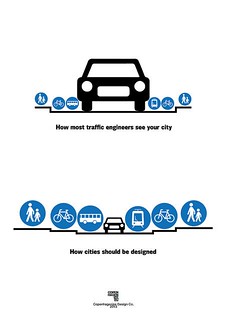
Tuesday, 23 July 2013
Trapped by A roads
So could we actually change things if we gathered:
1) all the people fighting for justice because they lost a family member in a preventable road traffic accident
2) all the people campaigning for safer streets and better pavements and crossings for disabled people
3) all the people who want to cycle safely
Gather the stats on road deaths locally and nationally
We have all the recommendations via the times Cities fit for Cycling but there needs to be a shift that will dramatically lower the number of deaths and make it actually possible to cross large A roads where roads coming out of towns and villages reach them - they are currently impassable making it impossible for many people to actually leave where they live on foot or by bike. There might not be that many deaths but that has more to do with people not being reckless enough to try to cross.
Could it be that just concentrating on cycling we are holding back the whole issue that the roads are just heavily designed in favour of motorised traffic which is why there are so many accidents/people simply don't walk or cycle as much as they could.
If we are expecting a step change from government, what about a step change from cycle campaigners and be mobility campaigners?
1) all the people fighting for justice because they lost a family member in a preventable road traffic accident
2) all the people campaigning for safer streets and better pavements and crossings for disabled people
3) all the people who want to cycle safely
Gather the stats on road deaths locally and nationally
We have all the recommendations via the times Cities fit for Cycling but there needs to be a shift that will dramatically lower the number of deaths and make it actually possible to cross large A roads where roads coming out of towns and villages reach them - they are currently impassable making it impossible for many people to actually leave where they live on foot or by bike. There might not be that many deaths but that has more to do with people not being reckless enough to try to cross.
Could it be that just concentrating on cycling we are holding back the whole issue that the roads are just heavily designed in favour of motorised traffic which is why there are so many accidents/people simply don't walk or cycle as much as they could.
If we are expecting a step change from government, what about a step change from cycle campaigners and be mobility campaigners?
Thursday, 27 June 2013
Forget cycle promotion, try driver education
I am reading all over the net the debate about how to make cycling safer and that cyclists are being killed and injured on roads all over the developed world. The elephant in the room is the perpetrator is the motorist and yet none of the responsibility is being given to them. Often the report starts with the fact that the person killed was a cyclist that wasn't wearing a helmet, as if that makes it his fault.
There are a few simple rules and facts that I think motorists are just not aware of and the facts and the fictions are mixed up.
Fiction: Road tax - drivers pay to use the roads, all other users that don't are cheap scum.
Fact: The roads are paid for by the tax we all pay and Vehicle Excise Duty is a tax on fuel emissions only - electric cars don't pay "road tax" either. This has been the case since the 1930's deliberately so that drivers don't get to own the roads that roads have been there in some cases since the Romans - the road outside my house has been there well before Henry VIII - it's called Lynn Road - before Henry VIII made Lynn into Kings Lynn. The roads were not built for cars but for transportation in general.
Fiction: I need to do be doing at least the speed limit and if something gets in my way, I need to overtake it.
Fact: The highway code says: The speed limit is the absolute maximum and does not mean it is safe to drive at that speed irrespective of conditions. Driving at speeds too fast for the road and traffic conditions is dangerous. You should always reduce your speed when
There are a few simple rules and facts that I think motorists are just not aware of and the facts and the fictions are mixed up.
Fiction: Road tax - drivers pay to use the roads, all other users that don't are cheap scum.
Fact: The roads are paid for by the tax we all pay and Vehicle Excise Duty is a tax on fuel emissions only - electric cars don't pay "road tax" either. This has been the case since the 1930's deliberately so that drivers don't get to own the roads that roads have been there in some cases since the Romans - the road outside my house has been there well before Henry VIII - it's called Lynn Road - before Henry VIII made Lynn into Kings Lynn. The roads were not built for cars but for transportation in general.
Fiction: I need to do be doing at least the speed limit and if something gets in my way, I need to overtake it.
Fact: The highway code says: The speed limit is the absolute maximum and does not mean it is safe to drive at that speed irrespective of conditions. Driving at speeds too fast for the road and traffic conditions is dangerous. You should always reduce your speed when
- the road layout or condition presents hazards, such as bends
- sharing the road with pedestrians, cyclists and horse riders, particularly children, and motorcyclists
- weather conditions make it safer to do so
- driving at night as it is more difficult to see other road users.
Fiction: I live, therefore I drive, and you are in my way.
Fact: this is the bit that I know to be fact but I can't find it anywhere - if you want to drive a motorised vehicle, you do so under licence and that implies by law that you have to have this licence, that you have insurance and that you abide by the highway code. Everywhere I search on the law that allows you to drive on the road, it tells you about how to get a licence. Nowhere does it say anything about what that licence is actually for - so that you and your vehicle can use the road.
The road is never automatically yours, you are there under agreement to abide by the highway code and consider all users.
Fiction: Driving is a human right, that without a car, you are not really a useful citizen.
Fact: Our bodies are designed to move us around and we are capable of travelling quite large distances under our own steam. Using our bodies as a means of transportation is what keeps our bodies in tune, like a motor. Use it or loose it. There are also many amazing inventions designed to transport lots of people around needing only one driver - a driver who as undergone special training and undertakes the responsibility for the safety of it's passengers....Public Transport! It's much safer too, you can read a book, listen to music, go for a wee, eat! it's amazing!
I read the section on Cycling and it's definitely not written by someone who rides a bike on a regular basis, and certainly not designed by someone who uses a bike for daily transportation.
I read the Higway Code section on cyclists and it says:
Clothing. You should wear
- a cycle helmet which conforms to current regulations, is the correct size and securely fastened
- appropriate clothes for cycling. Avoid clothes which may get tangled in the chain, or in a wheel or may obscure your lights
- light-coloured or fluorescent clothing which helps other road users to see you in daylight and poor light
- reflective clothing and/or accessories (belt, arm or ankle bands) in the dark.
For a start they use the word "should" bearing mind that they said drivers should reduce their speeds when...bla bla. So me not wearing a helmet to cycle to the shops is the same flouting the highway code as the driver who doesn't slow down to over take a cyclist in a built up area?
Back to bloody helmets! Statistically drivers should wear helmets to drive too, based on head injuries caused by accidents. People don't just fall off bikes in town and a helmet isn't a bullet proof vest, if drivers are going too fast and not paying attention, a helmet can't protect the rest of your body, it's not a bubble. It's not going to help if you are car doored under a bus.
I insist my kids wear a helmet at all times on a bike, it's very likely that if we stay in the UK it will become a habit that they will always have. Children are more likely to bang their heads when they fall off bikes, the studies show and brain injuries are by far the hardest to deal with. However, when we move to Holland this will undoubtedly change and the helmet will become redundant, the rule is generally, cycling to school and round town, no helmet, riding on a road bike or mountain bike and going as fast as you can, wear a helmet.
My chain is completely enclosed and I have a dress guard, if I want to cycle in a dress or palazzo pants, I can (and do). Bikes, unlike 40 tonne lorries and cement mixers, don't have to be classified as industrial equipment.
I wear bright colours mostly anyway and I make sure there are reflective bits and lights on my bike and my kid's bikes. This again is not some recipe for safety - I know of plenty of cyclists who have been wearing hi-viz, lit up like a Christmas tree who have been hit by drivers who just weren't paying attention - they weren't working on the basis that they need to look out for vulnerable users on the road that's in a town and therefore there are people around not encased in metal. I grew up learning that you assume you haven't been seen and most canny road users will say, treat other users like they are a bit dim, give them plenty of space and the benefit of the doubt.
Drivers need to be reminded and reminded that the roads are not theirs and theirs alone. That driving is a privilege, not a right and it comes with as much responsibility as a firearm.
The licence should be earned and if abused, should be revoked. In doing so, you also in turn need to make sure that there are always other means of getting to work - it should be unacceptable to expect people to work somewhere where they have to be able to drive to get there. Shops should be in walking distance, have bus stops and the ability to deliver where relevant (most of them already do).
When the driving licence became viewed as a right, probably some time in the 70s or 80s when the government saw pound signs flashing in their eyes with North Sea Oil, the right to public transport became optional and so the years of neglect for all other means of transportation continued.
All our money goes on air ambulances, trauma units for car crashes and all the illness associated with inactivity and stress.
Don't put all the focus on the 2% who use a bike, try the other 98%, that might be much more effective no?
Subscribe to:
Posts (Atom)